
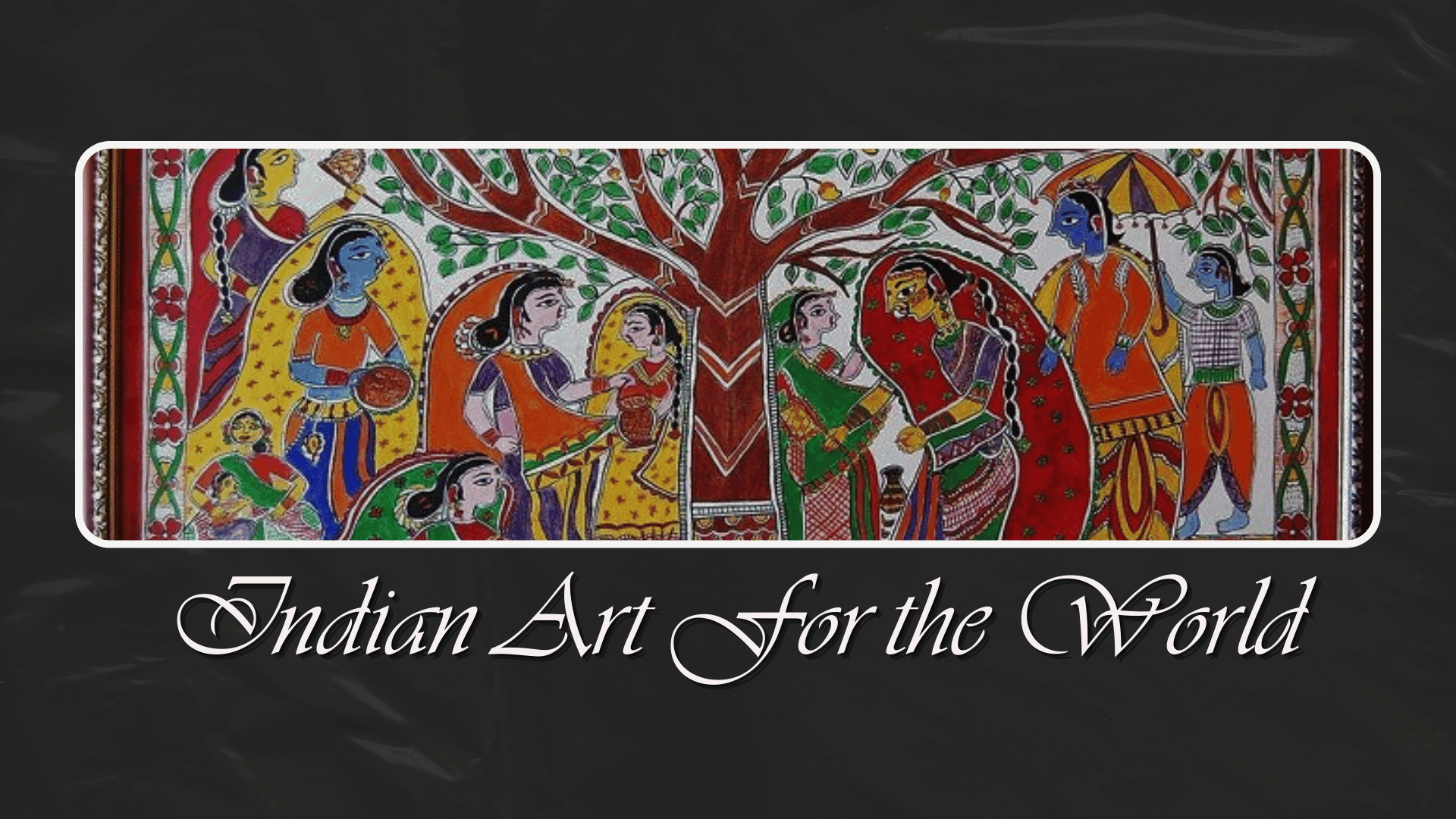
India is a land of colors and stories. Every state in our country has its own unique style of painting and crafting. These art forms are not just drawings; they are a way of life. For centuries, Indian artists have used mud walls, cloth, and natural colors to create magic. Today, these local art forms have crossed our borders and are famous all over the world.
Let us look at the different types of amazing art that India has given to the world.
1. Madhubani Painting (Mithila Art)
Originating from the Mithila region of Bihar, Madhubani is perhaps the most famous Indian art form globally. Traditionally, women in the villages drew these paintings on the walls of their mud houses to celebrate weddings and festivals.
- What makes it special: The paintings use bright natural colors and fill every inch of the canvas with patterns. There is no empty space.
- Global Love: Today, you can find Madhubani designs on mouse pads, coffee mugs, and sarees in markets from London to New York.
[Image Reference 2: A vibrant Madhubani painting showing nature, birds, and a sun with a human face, using bright red, yellow, and green colors.]
2. Warli Painting
Coming from the tribal areas of Maharashtra, Warli art is very simple but very deep. Unlike other paintings that tell stories of gods, Warli art shows the daily life of the tribal people—farming, dancing, and hunting.
- What makes it special: It uses only white color (made from rice paste) on a red ochre background. They use simple shapes like circles (sun/moon), triangles (mountains/people), and squares to build a whole world.
- Global Love: The simple geometric style of Warli is loved by modern interior designers and fashion brands worldwide for its "minimalist" look.
[Image Reference 3: A classic Warli painting on a brown background showing a circle of people holding hands and dancing around a musician.]
3. Tanjore Painting
If you travel down south to Tamil Nadu, you will find the rich and royal Tanjore paintings. This art form started in the 16th century under the Chola rulers.
- What makes it special: These are "relief" paintings, which means they have a 3D effect. Artists use real gold foil and semi-precious stones to decorate the pictures of Gods and Goddesses.
- Global Love: Art collectors across the globe buy these paintings as premium items because they look grand and majestic.
[Image Reference 4: A magnificent Tanjore painting of Lord Krishna eating butter, decorated with shining gold foil and colorful stones.]
4. Kalamkari
The word 'Kalamkari' literally means "pen-work" (Kalam = Pen, Kari = Work). This art form belongs to Andhra Pradesh and Telangana. It involves painting or printing on cotton fabric.
- What makes it special: Only natural dyes are used. The artists use a bamboo pen to draw intricate fine lines depicting stories from the Ramayana and Mahabharata.
- Global Love: Kalamkari fabrics are exported in huge numbers to Europe and America for making dresses, curtains, and bedcovers.
[Image Reference 5: A piece of Kalamkari fabric showing a detailed scene from an Indian epic with earthly colors like indigo, mustard, and rust.]
5. Pattachitra
This is the traditional cloth-scroll painting from Odisha. The word Pattachitra comes from Sanskrit where 'Patta' means cloth and 'Chitra' means picture.
- What makes it special: These paintings are known for their fine lines and intricate details. They mostly depict the stories of Lord Jagannath. The colors are handmade from vegetables and minerals.
- Global Love: Tourists visiting the heritage village of Raghurajpur in Odisha often take these scrolls back home as souvenirs, spreading this art globally.
6. Gond Art
Gond painting is a famous tribal art from Madhya Pradesh. The Gond people believe that seeing a good image brings good luck.
- What makes it special: The signature style of Gond art is the use of dots and dashes to create textures. Artists paint animals and trees, but they fill them with intricate patterns that give a sense of movement.
- Global Love: Gond art has been showcased in art galleries in France and Japan, proving that tribal art has a universal language.
[Image Reference 6: A colorful Gond painting of a deer standing under a tree, filled with fine dots and lines in bright blue and orange.]
Conclusion
Indian art is not just about decoration; it is about our history, our beliefs, and our nature. From the simple white lines of Warli to the shining gold of Tanjore, India has given the world diverse ways to see beauty. As Indians, we should be proud that our local heritage is now a global treasure.